Three tracks. Three very different tests.
Every Australian traveller has a bucket-list track. For a lot of our owners, it is one of three: the Gibb River Road in the Kimberley, the Oodnadatta Track through outback South Australia, or the long run across the Nullarbor.
We know these roads well, because our team takes Everest vans out on them. Each one punishes a caravan in a different way, and understanding the difference is the best way to understand what "off-road" should actually mean when you are choosing a van.
The Gibb River Road: corrugations and creek crossings
The Gibb runs roughly 660 km between Derby and the Kununurra end of the Kimberley, and much of it is unsealed. The biggest enemy here is corrugation: kilometre after kilometre of rhythmic ripples that shake everything loose that is not built to stay put. Add river and creek crossings, sharp rocks and dust that gets into every gap, and you have a track that finds weak points fast.
What your van needs
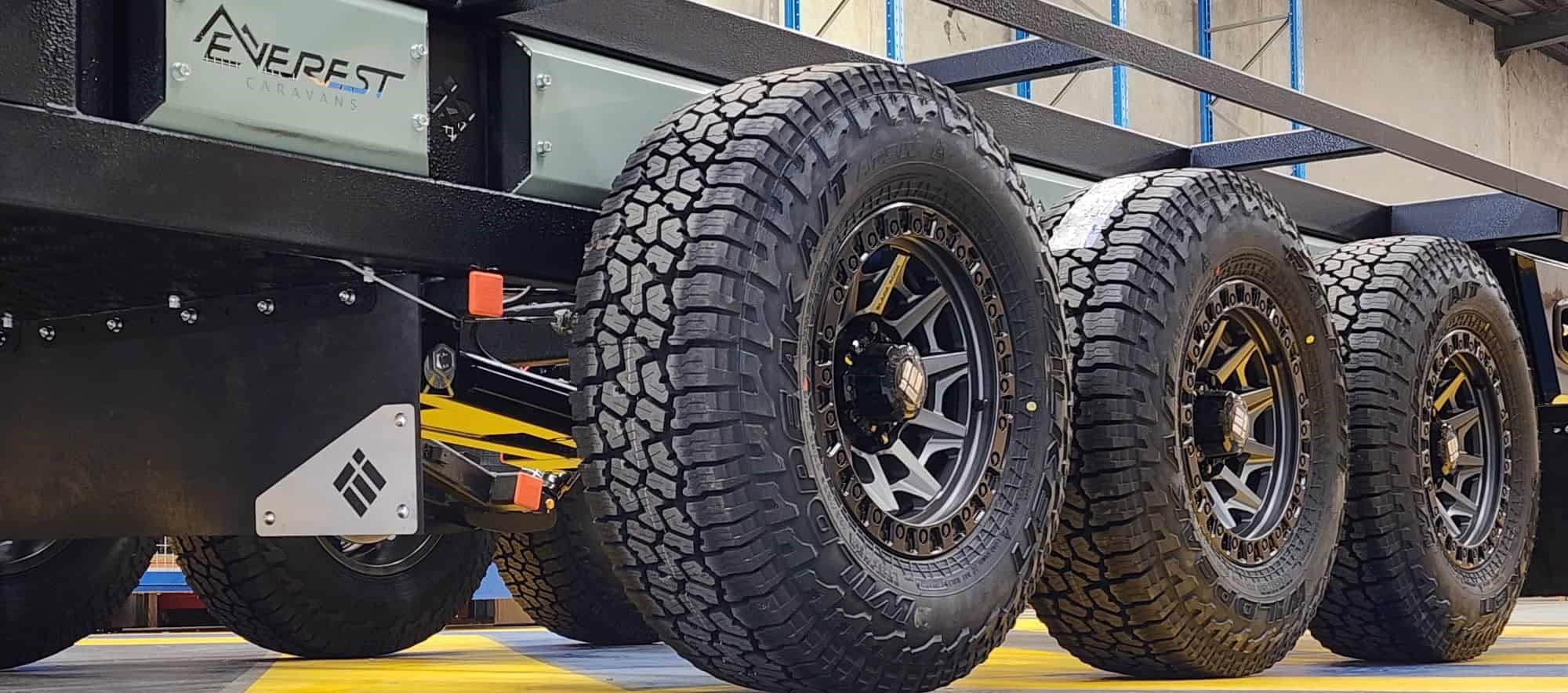
- A chassis that will not fatigue. Constant vibration is what cracks welds and fatigues steel. Every Everest is built on a hot-dipped galvanised chassis, which protects the steel inside and out against rust and water exposure from crossings.
- Independent suspension with real travel. It keeps tyres in contact with the ground and stops the body copping the full force of each corrugation.
- Sealed, dust-resistant construction. Fine red dust will find any gap around hatches, doors and storage. Good seals and a well-built body keep the inside liveable.
- Cabinetry that is fixed properly. Furniture that is glued and stapled may look fine in a showroom, then rattle apart on the Gibb. Ask how the interior is fastened.
Travel tip: The Gibb is generally a dry season trip. Sections close during the wet, so check Main Roads WA road condition reports before you commit to dates.
The Oodnadatta Track: isolation and gibber
The Oodnadatta Track follows the old Ghan railway line for around 600 km between Marree and Marla. It is remote, with long gaps between help, and the surface ranges from smooth to sharp gibber stone that is tough on tyres and underbodies.
What your van needs
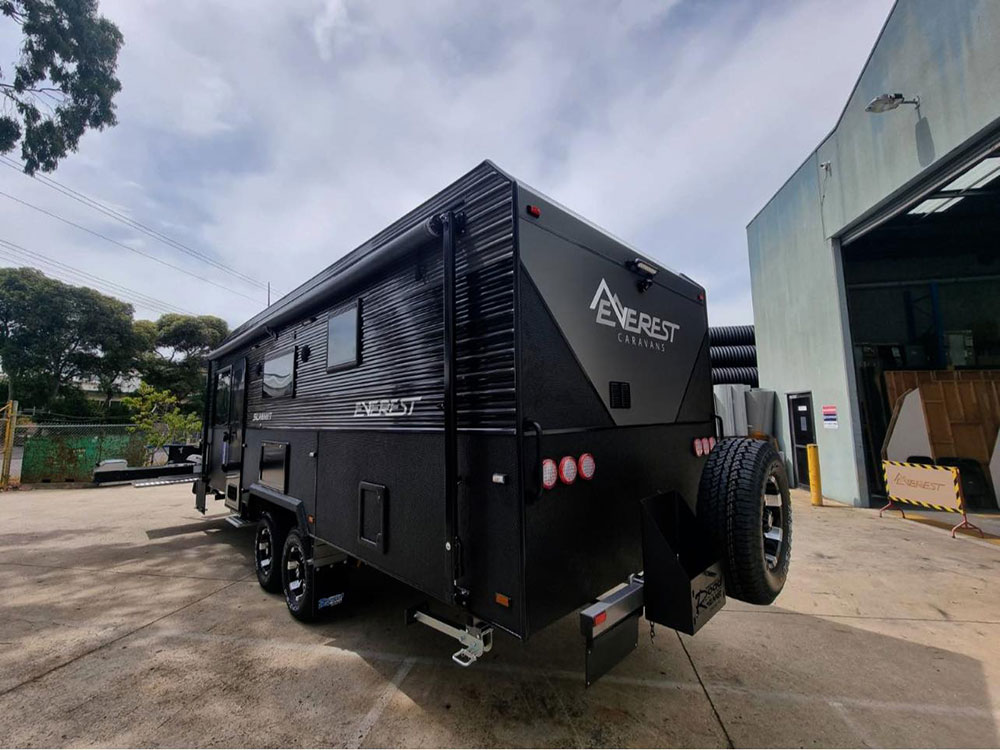
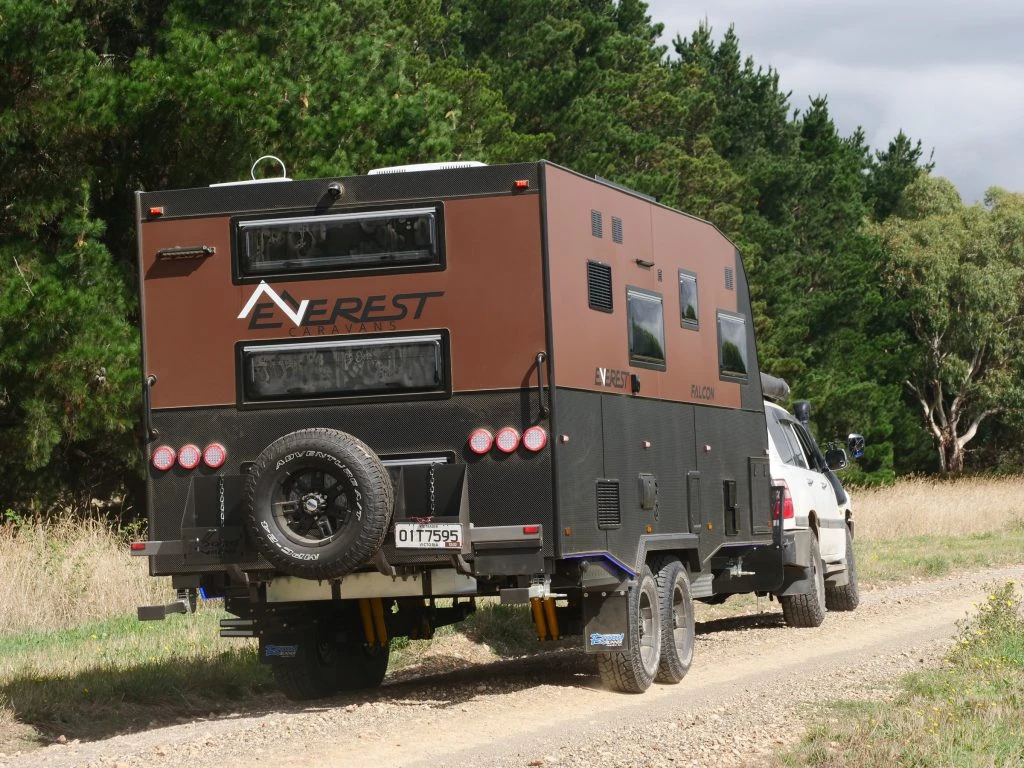
- Underbody protection. Stones thrown up by your tow vehicle and your own wheels will hammer the front and underside of the van. Every Everest is wrapped in checker-plate armour for exactly this reason.
- Self-sufficiency. Plenty of water storage, solid battery and solar capacity and practical storage for spares mean you are not relying on the next town.
- Ground clearance and departure angles. Washouts and dips are common after rain. A high-clearance build helps you avoid scraping tanks and fittings.
Travel tip: Rain can close the track quickly. Check the South Australian outback road warnings before you leave and again along the way.
The Nullarbor: distance and heat
The Nullarbor crossing is mostly sealed, so people sometimes underestimate it. The challenge is not the surface: it is the sheer distance, the heat, the crosswinds and the road trains.
What your van needs
- Stability at highway speed. Good weight distribution and a correctly set up tow ball weight make a big difference when a road train passes or a crosswind hits.
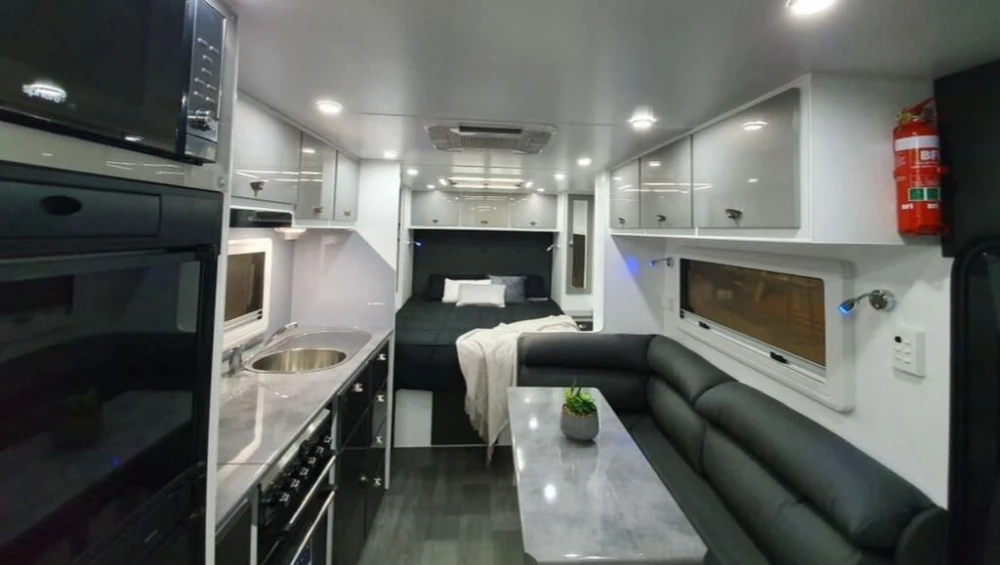
- Comfort for long days. Ventilation, insulation and a layout that works for you matter more when you are spending weeks on the road. Large windows and a well-ventilated interior keep things bearable in the heat.
- Reliable fittings. Appliances, plumbing and electrics from proven suppliers mean fewer surprises far from a service centre. Everest vans are fitted with parts from trusted Australian caravan suppliers such as Dometic, Thetford and Camec.
Travel tip: Fuel up whenever you have the chance, and plan rest stops. Fatigue is a bigger risk on the Nullarbor than the road itself.
What "off-road" should really mean
Plenty of vans are sold as off-road. The real test is what is underneath and behind the panels. Before you buy, ask:
- What is the chassis made of, and how is it protected against rust?
- What suspension is fitted, and has the van been tested on unsealed roads?
- How is the underbody protected from stone damage?
- How is the interior cabinetry fixed to the frame?
- What structural warranty backs the build?
At Everest, the answers are simple. Hot-dipped galvanised chassis. Checker-plate armour. Vans tested on the Gibb, the Oodnadatta and the Nullarbor. And a 5-year structural warranty, because we build them to last for decades of big laps, not just one.
See it before you hit the road
The best way to understand an off-road build is to see one being made. Our factory and showroom is at 51 Glenbarry Road, Campbellfield VIC, about 20 minutes from Melbourne Airport.

.jpg)
.png)