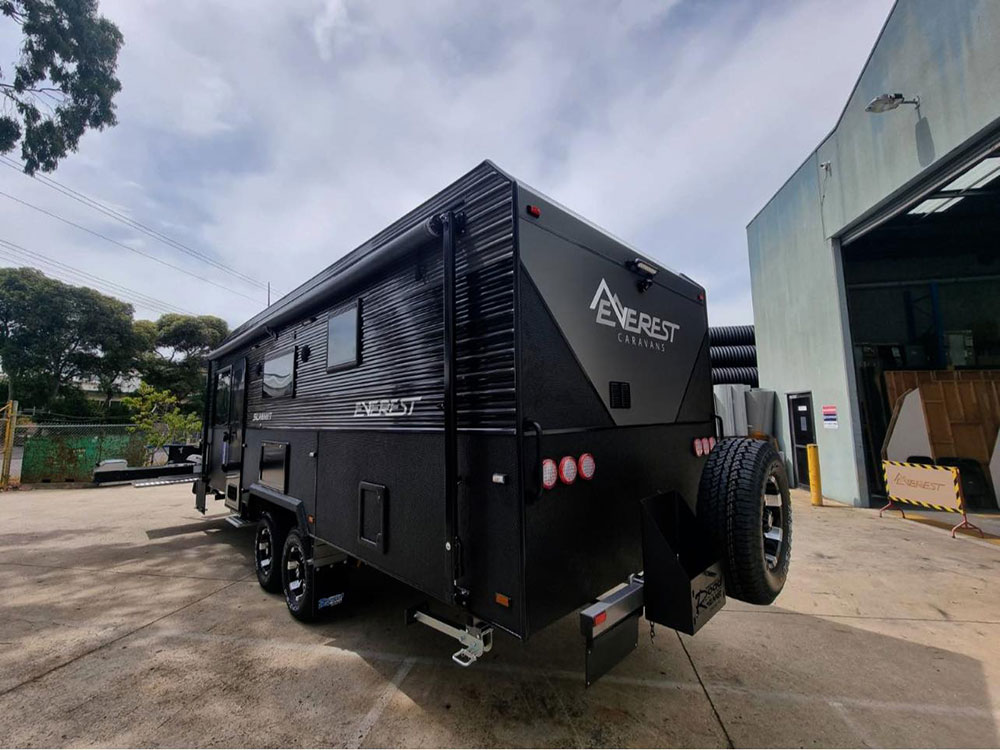
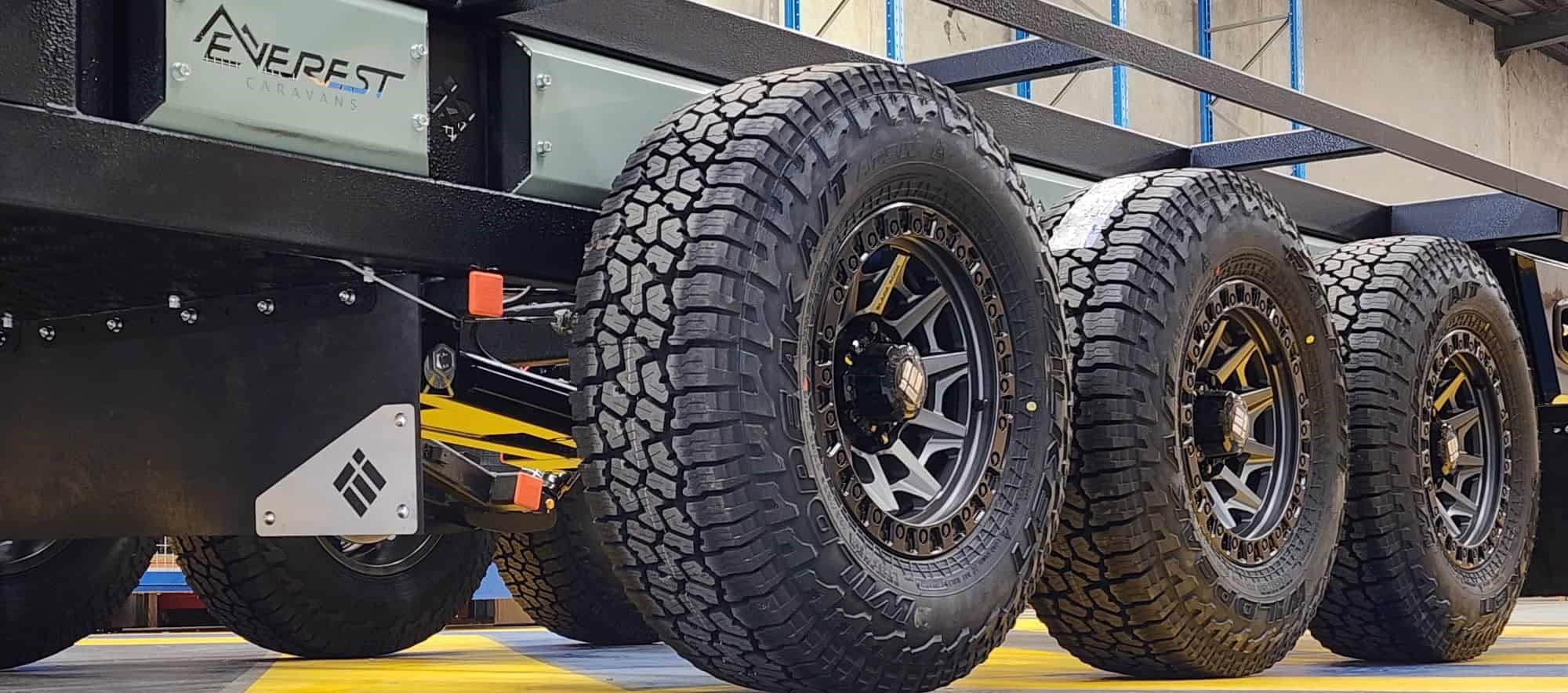
BUILT FOR YOUR LIFESTYLE!
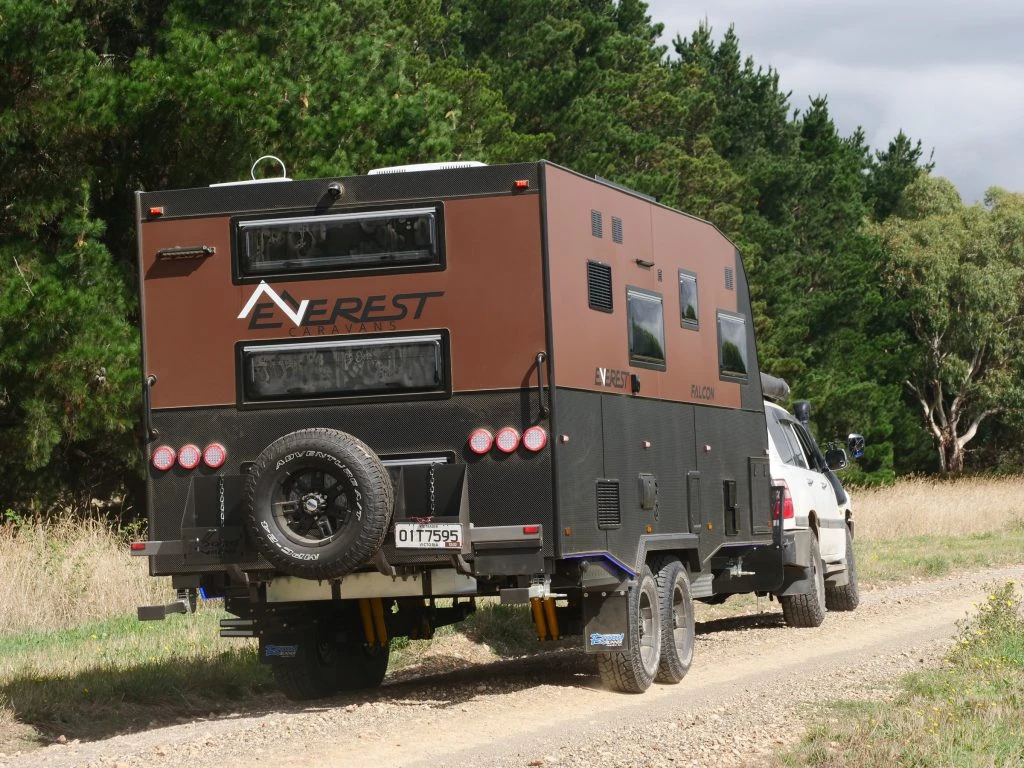
Australia has a way of making the road feel endless.
One morning you are following a smooth highway through open farmland.
Next, the bitumen disappears.
Red dirt rises behind the tow vehicle.
The phone signal fades.
The towns become smaller.
The sky becomes bigger.
And somewhere beyond the next bend is the reason you bought a caravan in the first place.
Freedom.
But Australian travel can be demanding. Heat, corrugations, gravel, steep tracks and
long distances can quickly reveal the difference between a caravan that simply looks
adventurous and one that genuinely suits the journey.
Choosing from the many Off-Road Caravans Australia has to offer is therefore about
more than picking the biggest van or the most impressive interior.
You need to think about where you want to travel, what your tow vehicle can safely
handle, how much water and power you need, who will be travelling with you and what
level of comfort matters when the road becomes rough.
The right caravan should not decide where you can go.
It should help you get there.
Start With the Adventures You Actually Want
Before comparing suspensions, batteries or floorplans, ask one simple question:
Where do I want to travel?
Your answer changes everything.
If most of your holidays involve sealed highways, established caravan parks and short
gravel access roads, you may not need the same setup as someone planning remote
station tracks and long stretches away from powered sites.
Think honestly about your travel style.
Do you dream of:
● Coastal touring?
● National parks?
● Outback roads?
● Remote camps?
● Long family holidays?
● Weekend escapes?
● Free camping?
● Extended trips around Australia?
The Best off-road caravans Australia can offer are not simply the toughest looking
vans.
They are the vans that match the places you actually intend to explore.
Understand What “Off-Road” Means
The words “off-road” appear often in caravan advertising.
But not every caravan carrying the label is designed for the same conditions.
Some are better suited to highways and maintained gravel roads.
Others are built with stronger chassis systems, independent suspension, higher
clearance and off-road coupling systems intended for more demanding travel.
Before buying, ask the manufacturer what the caravan is designed to handle.
Do not rely only on photographs.
Ask about:
● Chassis construction
● Suspension
● Ground clearance
● Coupling
● Tyres
● Underbody protection
● Water storage
● Electrical capacity
● Dust protection
● Construction method
Everest Caravans, for example, currently offers models ranging from semi-off-road
family vans through to full off-road caravans. Models such as the Calibra, Alpine and
Storm are presented as full off-road models, while other models are designed around
different family and touring needs.
That variety matters.
Because “off-road” should describe how a caravan is built.
Not simply how it is painted.
Match the Caravan to Your Tow Vehicle
This is one of the most important decisions you will make.
A beautiful caravan is useless if your tow vehicle can’t safely and legally handle it.
Before choosing a caravan, understand the towing limits of your vehicle.
Look at:
● Maximum towing capacity
● Gross Combination Mass
● Towbar capacity
● Caravan Aggregate Trailer Mass
● Actual loaded caravan weight
● Payload
● Tow-ball load
● Vehicle payload
ATM, or Aggregate Trailer Mass, means the maximum total mass of the loaded trailer
specified by the manufacturer. Australian towing guidance also makes it clear that you
must stay within the relevant vehicle, towbar, coupling, caravan and tyre limits.
Do not calculate towing ability using the caravan’s empty weight alone.
Water adds weight.
Food adds weight.
Batteries add weight.
Gas bottles, bikes, tools, camping chairs, clothes and everything stored in the van add
weight too.
A caravan can become much heavier once real life is packed inside.
When comparing Australian off-road caravans, think about the loaded combination,
not just the number printed beside the showroom model.
Look Closely at the Chassis
The chassis is the foundation.
You may never admire it while sitting beneath the awning with a cup of tea.
But when the road begins to shake, it matters.
Rough roads create forces through the caravan structure. Corrugations can test
components repeatedly, kilometre after kilometre.
Look for a chassis designed for the intended use of the caravan.
Ask how it is constructed.
Ask about the A-frame.
Ask how the body is supported.
Ask what protection exists underneath.
Several of Everest’s full off-road models list Australian RHS steel chassis systems,
extended A-frames and off-road running gear as part of their construction.
The strongest caravan is not necessarily the heaviest caravan.
Good engineering matters more than simply adding steel.
Suspension Matters When the Road Stops Being Smooth
On a perfect highway, suspension can feel like something happening quietly underneath
you.
On corrugations, it becomes part of the whole journey.
Off-road suspension needs to manage movement while helping the caravan remain
stable over changing surfaces.
Independent suspension is common on purpose-built off-road caravans.
Depending on the design, it can allow wheels to move independently when travelling
over uneven surfaces.
Look at the suspension rating.
Ask about shock absorbers.
Ask about servicing.
Ask whether replacement parts are practical to source when travelling.
Everest’s current Calibra, Alpine Quattro and Storm models, for example, list off-road
suspension systems as part of their running gear.
A good suspension system does not make every road gentle.
Australia will still shake the coffee cups.
It simply helps the caravan deal with the journey it was built to take.
Think About Ground Clearance and Departure Angles
A caravan can have excellent suspension and still struggle if parts underneath sit too
low.
Ground clearance matters when crossing:
● Washouts
● Uneven tracks
● Creek approaches
● Steep entries
● Deep wheel ruts
Look beneath the caravan.
Where are the water tanks?
Where are the pipes?
Where are electrical components?
What hangs lowest?
Think about the rear of the caravan too.
A long rear overhang can become important when entering or leaving steep sections.
Everest’s Blizzard, for example, uses a cut-away rear design intended to improve
clearance through steeper terrain and crossings.
You do not need extreme clearance for every trip.
You need clearance appropriate to your destination.
Choose the Right Size for Your Family
More space feels wonderful in a showroom.
A larger bathroom.
A bigger kitchen.
A huge lounge.
Extra storage.
Then you reach a tight campsite.
Or a narrow bush track.
Or a small fuel station.
Suddenly compactness begins to feel beautiful.
Choosing size is a balance between comfort and mobility.
For couples, a compact caravan may provide everything needed without unnecessary
weight or length.
For families, bunk layouts can make longer trips much easier.
Everest Caravans currently offers several family-focused models, including compact
bunk vans and larger designs with two or three bunks. The Calibra, for example, is
positioned for families travelling with three children, while the Blizzard offers family
layouts with two or three bunks.
Good Family off-road caravans should give everyone somewhere to sleep without
turning every evening into furniture rearrangement.
Sometimes luxury is not leather.
Sometimes luxury is simply every child having their own bed.
Think About Water Before You Think About Wi-Fi
When you move away from caravan parks, water becomes one of the most important
resources you carry.
Ask how much fresh water the caravan can store.
Then think about how your family actually uses it.
Drinking.
Cooking.
Washing.
Showers.
Cleaning dishes.
A couple travelling for two nights has different requirements from a family spending a
week away from town.
More water gives greater independence.
But water is heavy.
Every litre adds roughly one kilogram of weight.
That means water capacity needs to be considered as part of your payload and towing
calculations.
The right setup is not necessarily the biggest tank available.
It is enough water for your travel style while keeping the caravan within its legal and
safe weight limits.
Decide How Far Off-Grid You Want to Go
Some people like caravan parks.
Power connected.
Water nearby.Amenities around the corner.
Others want to find a quiet place, switch everything off and stay there.
If off-grid camping is important, look carefully at the electrical setup.
Consider:
● Battery capacity
● Battery type
● Solar capacity
● Inverter capacity
● Charging systems
● Appliance loads
● Monitoring systems
Think about what you actually plan to run.
Lights and a water pump need relatively little compared with appliances such as air
conditioners, induction cooktops or high-powered electrical equipment.
There is no point having enormous battery capacity if you rarely leave powered sites.
There is equally little joy in watching the battery percentage fall every evening in the
middle of nowhere.
When comparing Off-Road Caravans Australia, match your power system to your real
camping habits.
The goal of off-grid power is simple.
Freedom without constantly thinking about the next power point.
Pay Attention to Dust Protection and Sealing
Australian dirt roads have a remarkable ability.
They can put dust almost anywhere.
Through tiny gaps.
Around doors.
Inside storage spaces.
Across bedding that was perfectly clean that morning.
If remote gravel travel is part of your plan, ask how the caravan manages dust entry.
Look at:
● Door seals
● Window seals
● Storage compartment seals
● External hatches
● Ventilation systems
● Cable and plumbing entry points
Water sealing matters too.
A caravan may face heavy rain one month and dry red dust the next.
Both eventually discover weak points.
Build quality lives in those small details.
Do Not Forget Tyres and Wheels
The tyres are the only part of the caravan touching the road.
Treat them accordingly.
Consider the tyre type, size and load rating.
Check whether replacements are reasonably accessible during Australian travel.
An unusual tyre combination may look impressive, but replacement becomes less
impressive when you are hundreds of kilometres from a major city.
Also think about spare wheels.
One puncture is inconvenient.
A second puncture in a remote country can become a much larger problem.
caravan you choose, regular tyre-pressure and condition checks should become part of
your travel routine.
Look at Storage With Your Real Gear in Mind
Storage always looks generous when it is empty.
Then camping happens.
Chairs.
Tables.
Hoses.
Electrical leads.
Recovery gear.
Food.
Clothes.
Tools.
Kids’ equipment.
Outdoor cooking gear.
Maybe bicycles.
Maybe fishing gear.
Look at storage compartments and imagine your own belongings inside them.
More importantly, think about where the weight will sit.
Australian road-safety guidance recommends correctly balancing caravan loads and
keeping heavier items low and appropriately positioned, rather than simply filling every
available cupboard.
A storage compartment is only useful if you can use it without creating a poor loading
arrangement.
Consider Customisation
No two travelling families are exactly alike.
One couple may want more solar.
Another wants additional water.
A family needs another bunk.
Someone else values a larger kitchen because they cook every meal.
This is where custom-built caravans can make a difference.
Everest Caravans describes its approach as working with customers to design caravans
around their lifestyle rather than asking buyers to accept a standard layout that only
comes close to what they need. The company is Australian owned and made and
operates from its Campbellfield manufacturing and display facility in Victoria.
That approach can be valuable when choosing Family off-road caravans, because family
requirements are rarely identical.
Build for the life you actually live.
Not the brochure photograph.
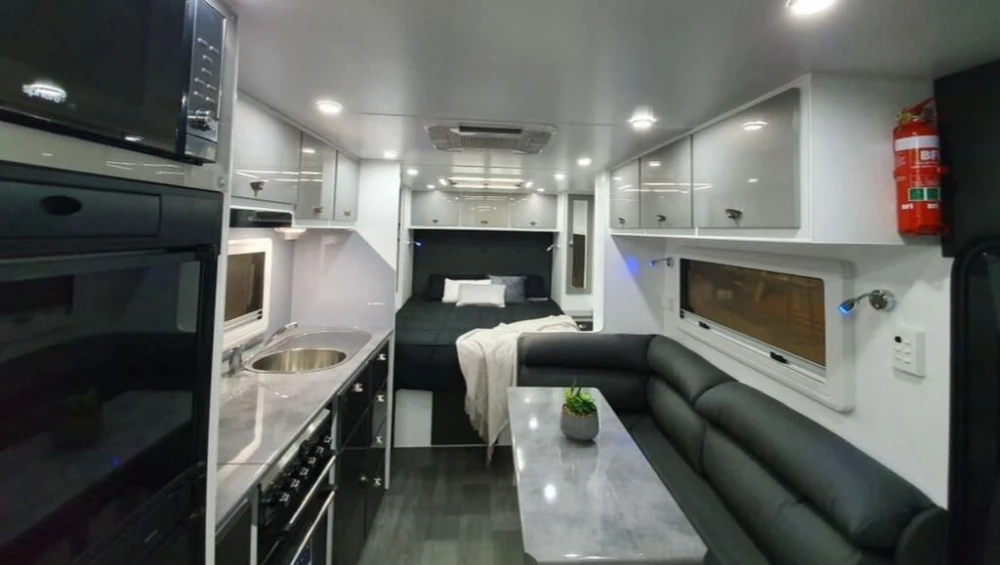
Walk Through the Caravan Slowly
Do not rush the buying decision.
Stand in the kitchen.
Open every cupboard.
Lie on the bed.
Stand in the shower.
Sit at the table.
Imagine someone cooking while someone else walks through.
Imagine children moving between the bunks and bathroom.
Ask yourself:
Can we actually live in this space?
A caravan can look enormous on a floorplan and feel different once people are inside.
Equally, a clever compact design can feel surprisingly open.
When searching for the Best off-road caravans Australia, a showroom walk-through
can tell you things specifications never will.
Your shoulders know when the walkway is too tight.
Think Beyond the Day You Pick It Up
Buying the caravan is only the beginning.
Ask what happens afterwards.
Who do you contact if you need help?
Where is the caravan built?
Who understands its systems?
What after-sales support is available?
Can you return to the manufacturer?
Everest says it provides service from the point of sale through delivery, handover and
after-care, with customers dealing directly with the manufacturer and dealer throughout
their caravan ownership.
That relationship matters.
Especially when the caravan is built for years of travel rather than one holiday.
The Right Caravan Should Feel Like Possibility
Choosing an off-road caravan can become technical very quickly.
ATM.
GCM.
Suspension.
Payload.
Solar.
Battery capacity.
Water storage.
Clearance.
All of these things matter.
But they serve something much simpler.
The journey.
The caravan should carry what you need.
Your vehicle should tow it safely.
The layout should suit the people you love travelling with.
The power and water systems should support the places you want to stay.
The construction should match the roads you intend to explore.
That is how to choose between the many Off-Road Caravans Australia has available.
Not by asking which caravan has the longest feature list.
Ask which one fits your adventure.
Maybe your road leads north through a warm coastal country.
Maybe west towards red earth.
Maybe into a quiet campsite where there is no reception and the stars arrive before
dinner is finished.
Australia gives you plenty of roads to choose from.
Choose a caravan that leaves more of them open.
Because the best caravan is not simply the one that looks ready for adventure.
It is the one that makes you want to hitch up, close the door behind you and find out
what is waiting beyond the next horizon.
Yes, if you plan to travel on gravel roads, remote tracks or spend time away from
powered caravan parks. If you mainly travel on sealed roads, a full off-road model may
not always be necessary.
5. How do I choose the right caravan size for my family?
Think about how many people will travel, where everyone will sleep and how much
storage you need. Also make sure the caravan size and loaded weight are suitable for
your tow vehicle.
FAQ
.png)
.jpg)